Team photo

The story of chasing a passion

The Beginning

There are several reasons why we decided to build a physical prototype, rather than a 3D model or a conceptual sketch. First, we were eager to realize a childhood passion before our eyes, no matter how rough or difficult it would be. We were also willing to learn from the process of rolling out a prototype. Last, we wanted to prove to the world that affordable, full-dome projection was possible, using a theory lacking an implementation. End result? It was worth it.

Developing Starjection involved weeks of planning and dozens of online meetings. Eventually, a plan to rig a smaller mock-up dome emerged.
Placeholder image
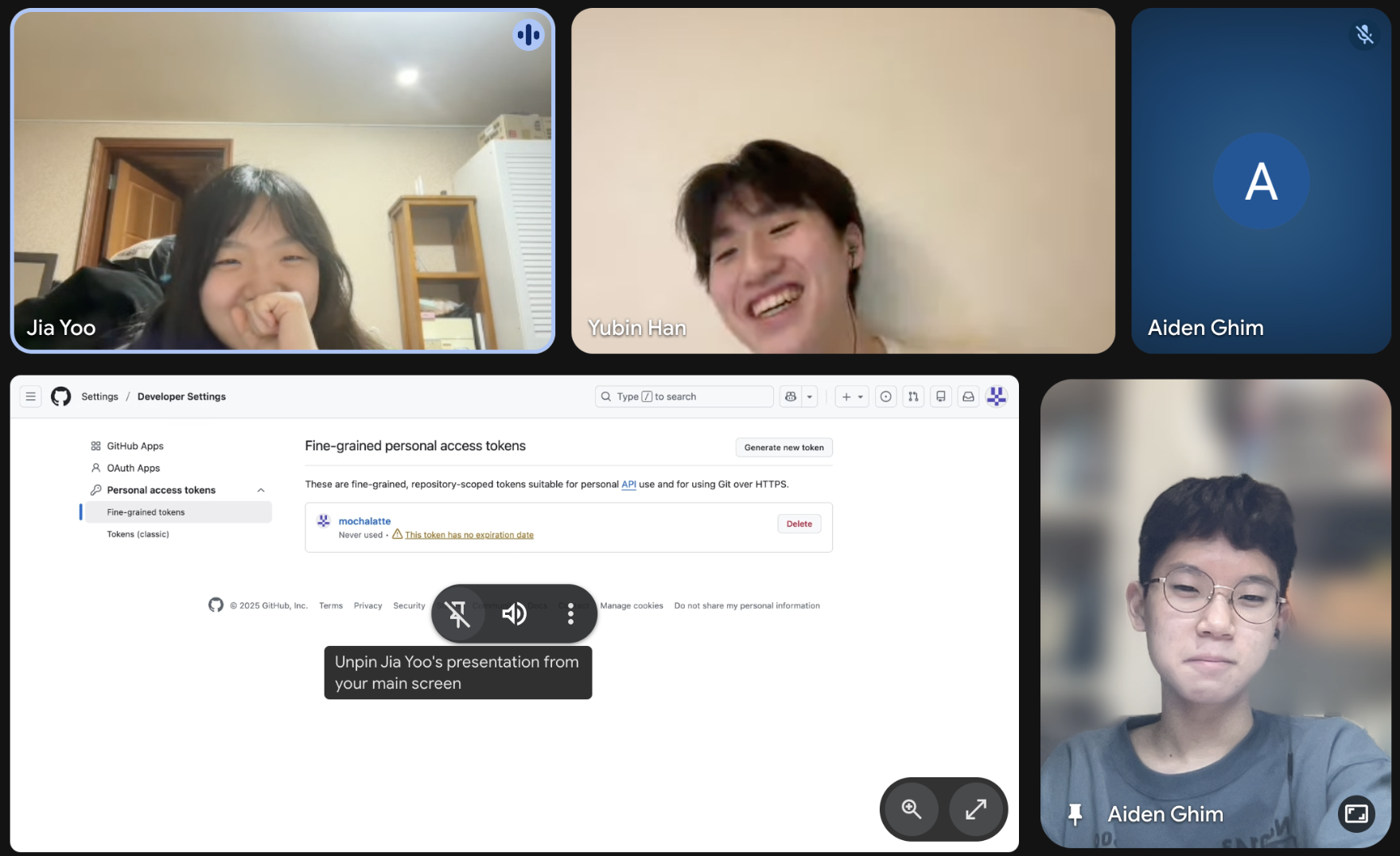
Setting up collaboration for our building scheme.

Dome #1

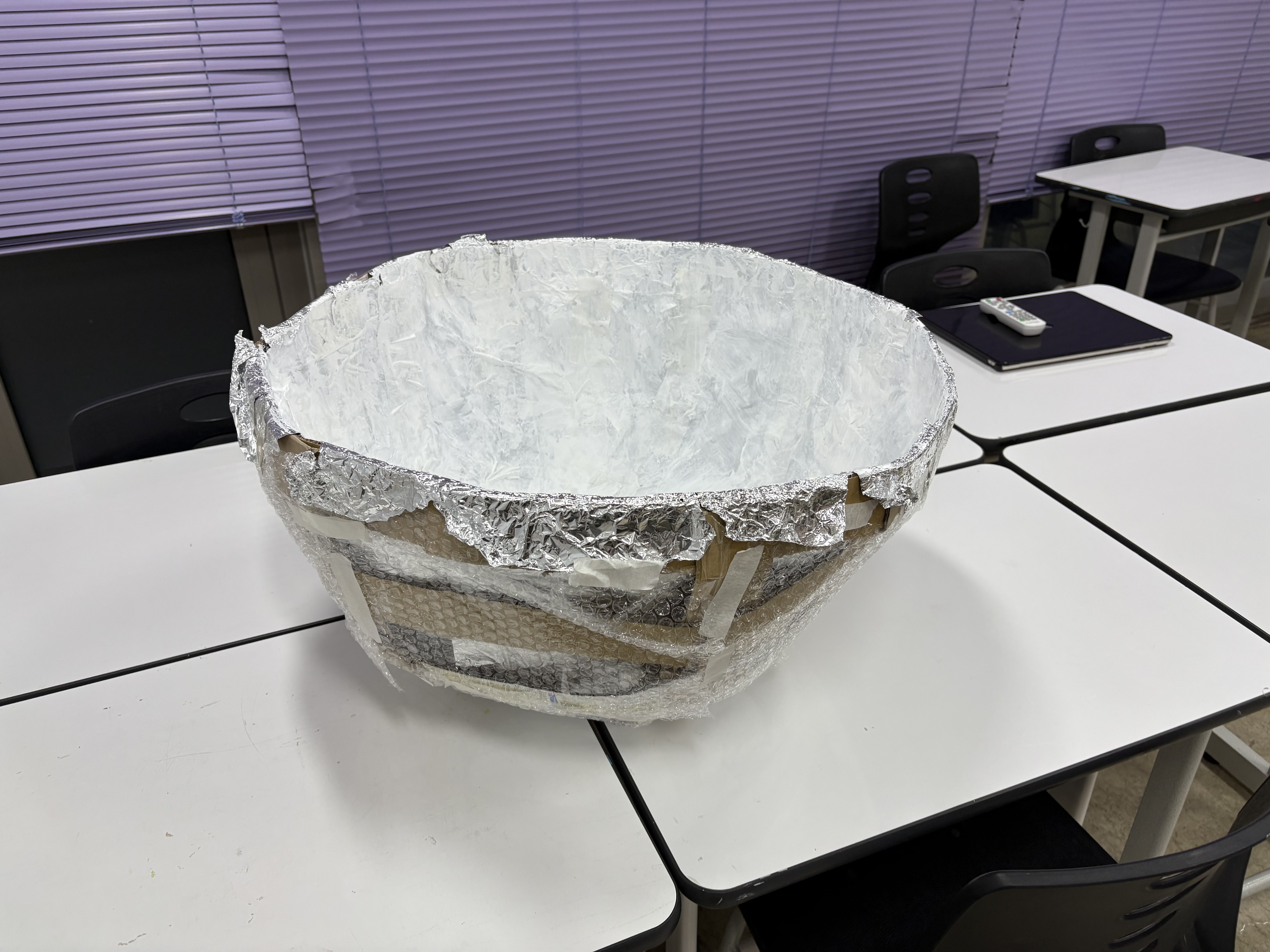
Our first dome measures 0.5 meters, or 1.6 ft. After several after-school meetings, we had a workable frame to test our projection.

Placeholder image
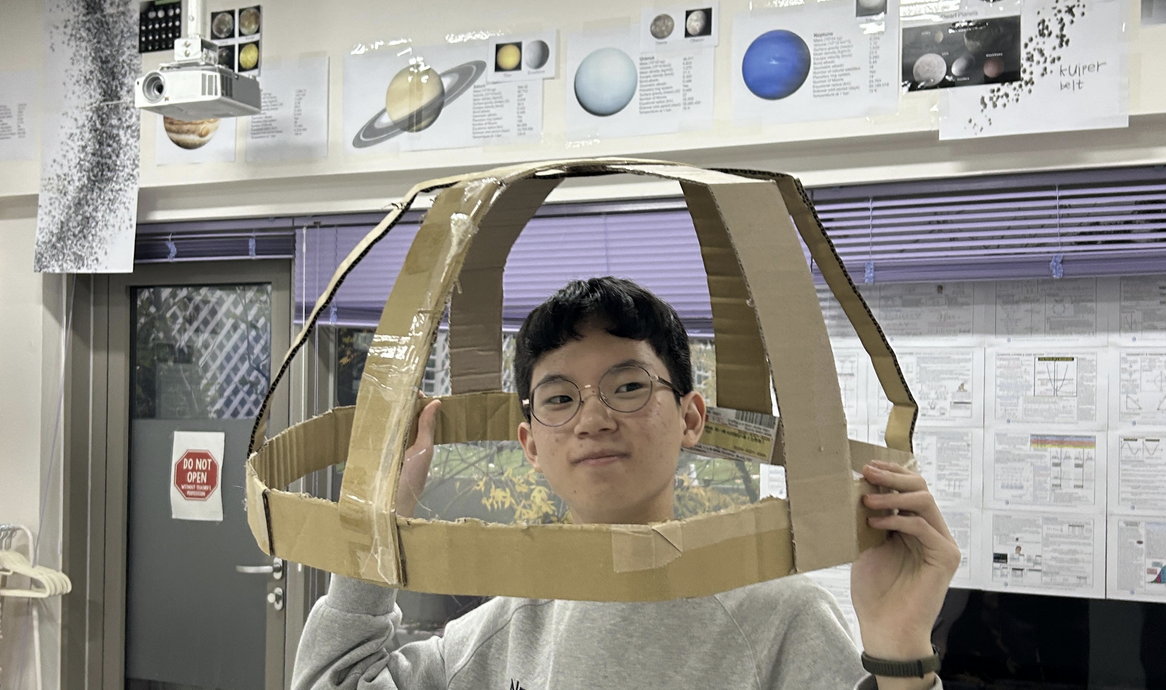
A bare minimal wireframe.
Placeholder image
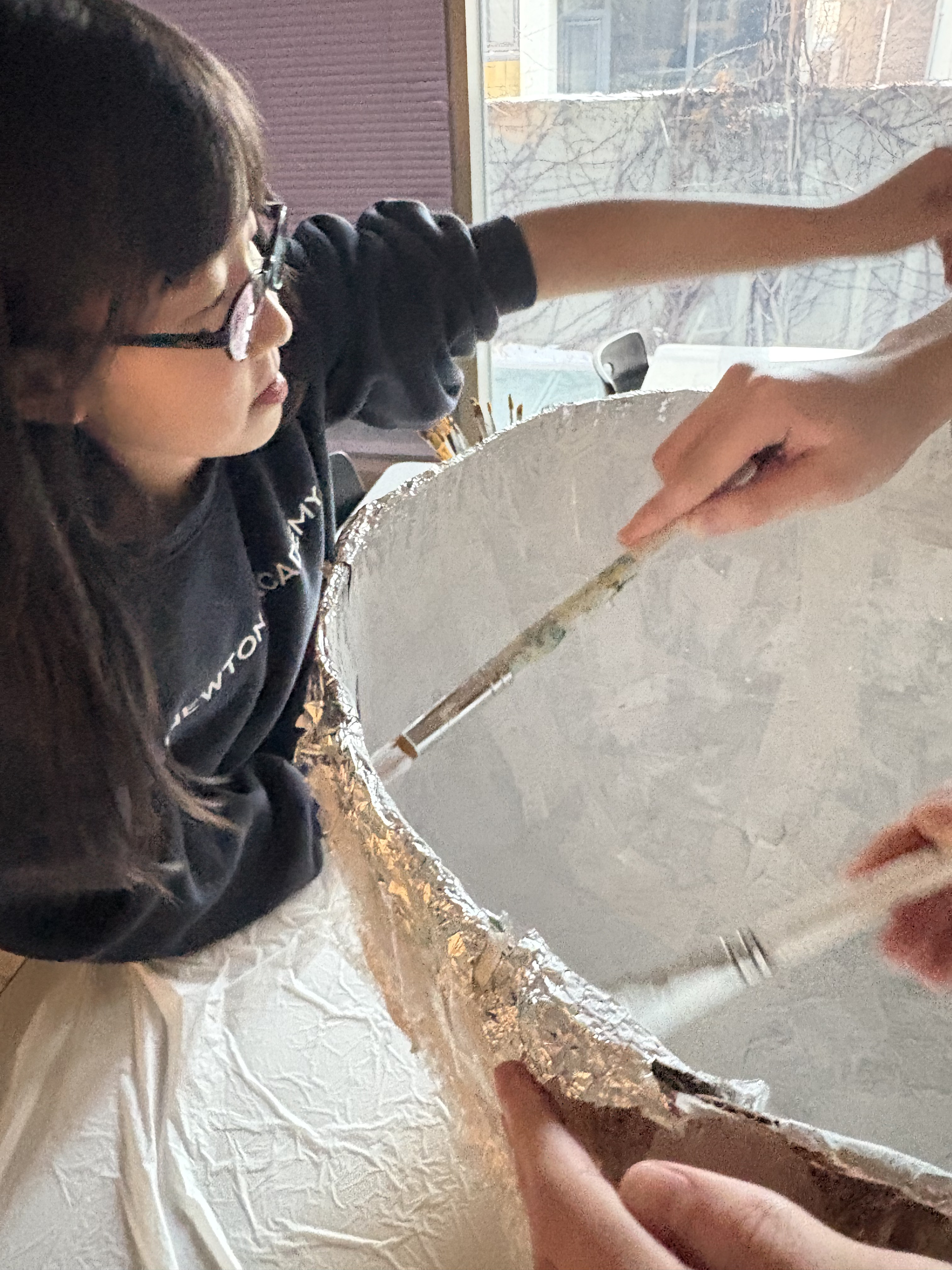
Yubin's younger sister was of great help! The team finished up interior painting quickly.
Placeholder image
The completed dome #1.

We learned a valuable lesson from the first prototype: small domes are not too compatible with 180° projection. While we did not end up using dome #1, the building workflow greatly reduced the time and effort that went into dome #2. And without this experience, we may not have thought to study the ideal dome size for our product.

Dome #2

From the experience of building dome #1, we decided on a dome measuring 2 meters (6.5 ft) in diameter. 2 meters was a carefully calculated design. If our dome was too small, the projector will not be able to focus, let alone use a spherical mirror properly. If it was too wide, overall brightness would have been compromised.

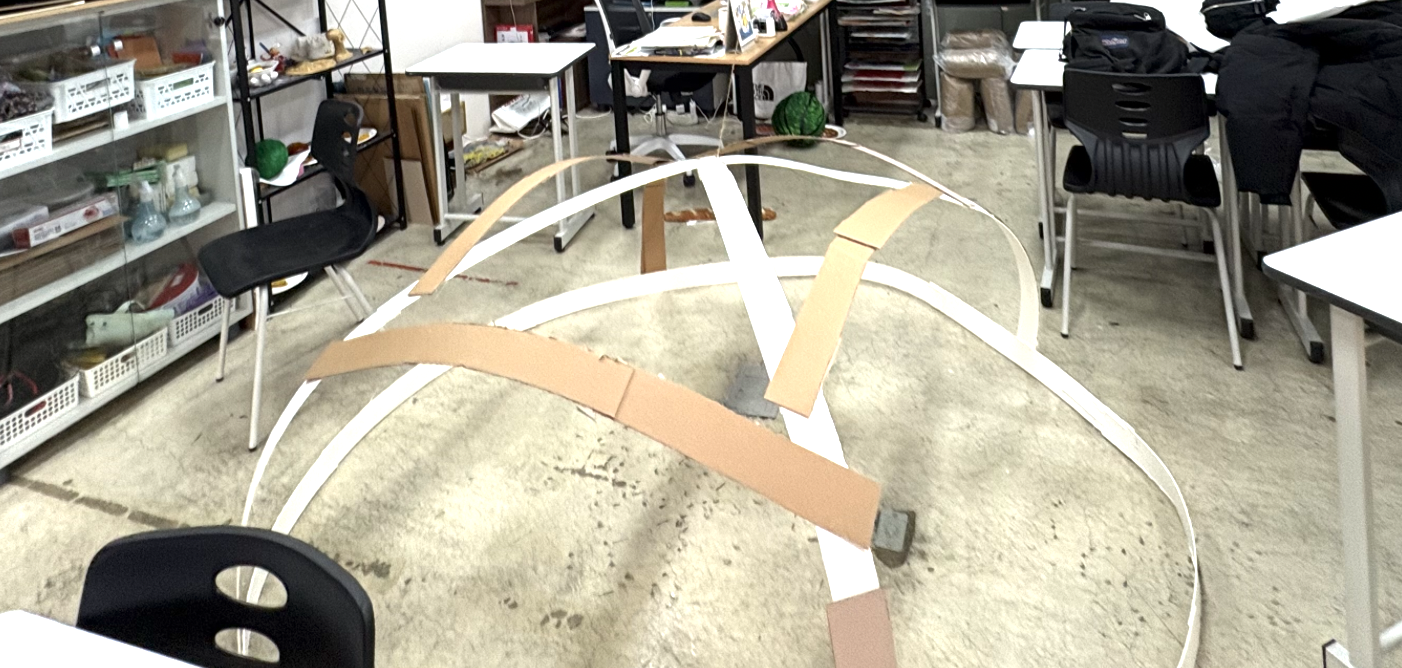
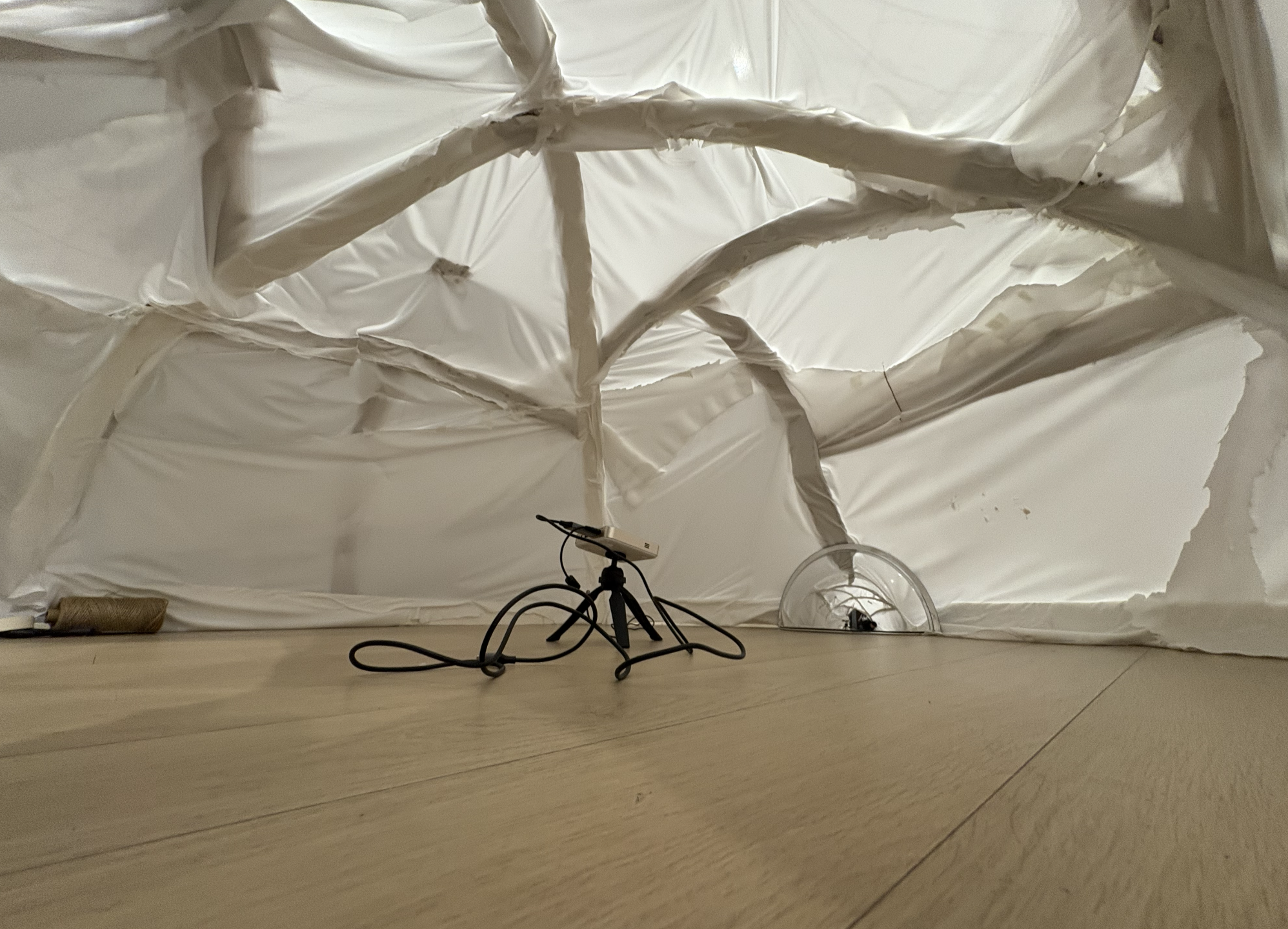
A few week's intensive work revealed our second prototype. This time, it was a projection-worthy one.

Placeholder image
A larger wireframe, built with hardboard.
Placeholder image
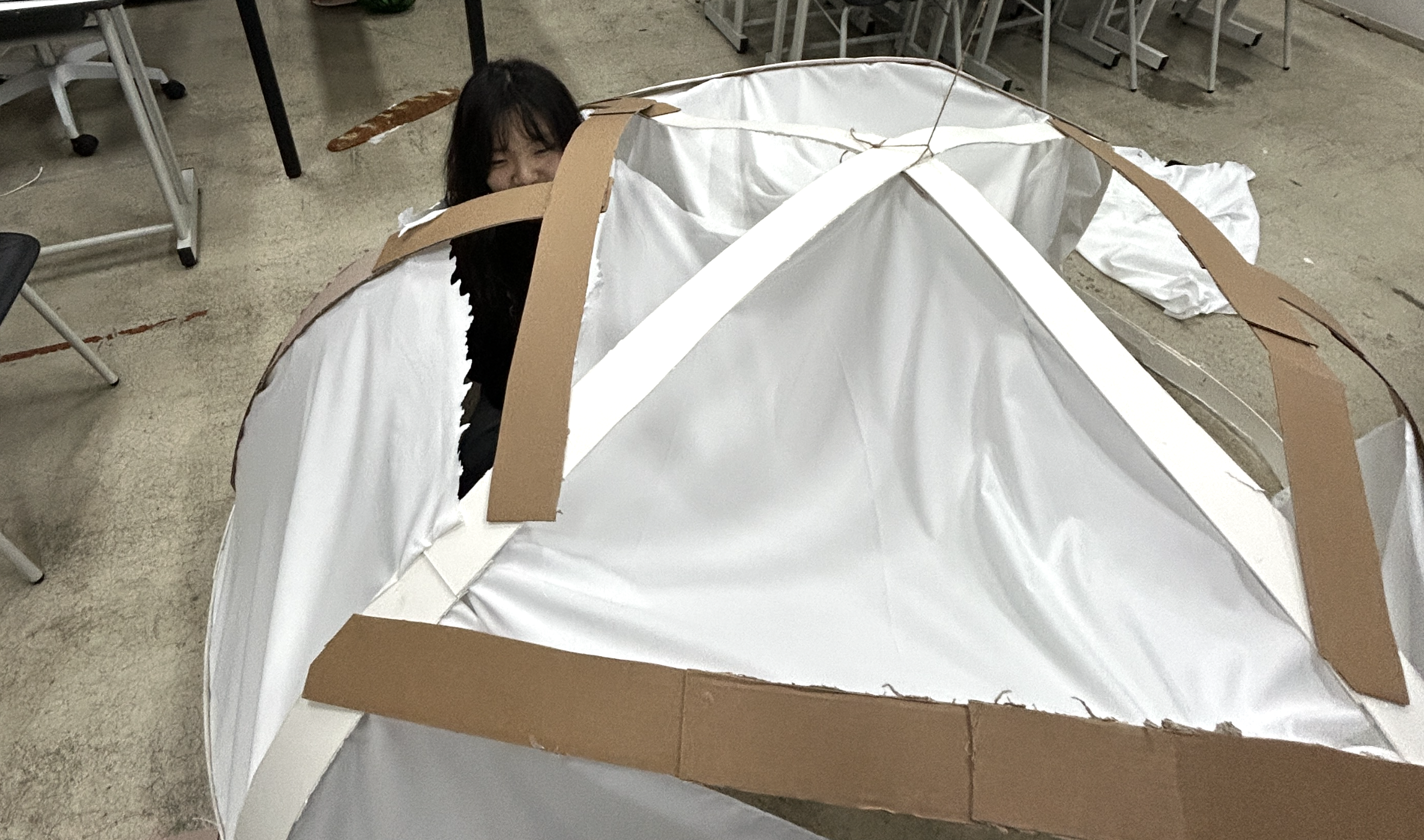
The completed dome #2, from within.

Spherical Mirror Projection

Starjection is the first commercial product to implement spherical mirror projection. While related theory has been from proposed as early as 2003, the idea never expanded beyond a select few hobbyists at best.

The essence of our system is to enable full-dome coverage without the use of special optics. This is the main culprit behind the astronomical pricing of building-grade equipment. The Messier Again team instead uses a spherical mirror to redirect light rays; this extends the projector's 50° angle to a staggering 180°.

Placeholder image
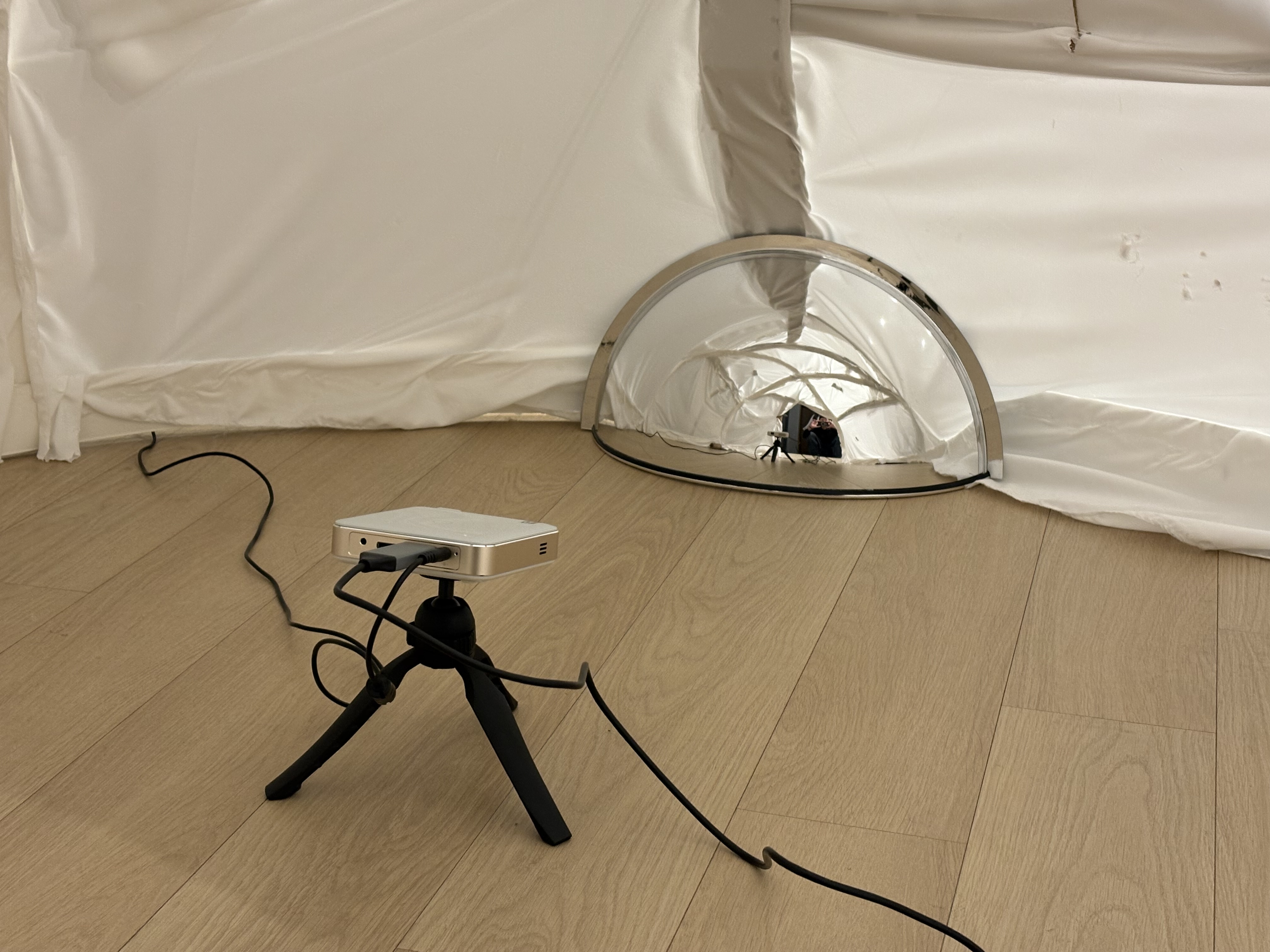
The projector setup, involving meticulous details.

The first few days of this phase was spent aligning focus, throw, and placement. Below are some of Starjection's 'first lights.'

Starjection's 'first light,' the Messier Again team's logo.
Minimal demonstration of screen-warped projection.

Starjection's Present & Future

At last, our team has a functioning prototype of Starjection. We are left with excitement, and yet more challenges! Our team plans on a dome build with a lighter, thinner, and sturdier wireframe than hardboard. We also plan to upgrade our projector with a shorter-throw version. Most importantly, we are eager to kickstart the first-ever planetarium content platform. An ecosystem grows slowly, but also offers a lasting advantage over potential competitors.